Tir Sir Gâr
A family was forced to confront the future of their farm following the father’s sudden illness. Would one of his children step forward to continue the family tradition? What relationship did the younger generation have with the land? And what was lost when people stopped farming and left the countryside?
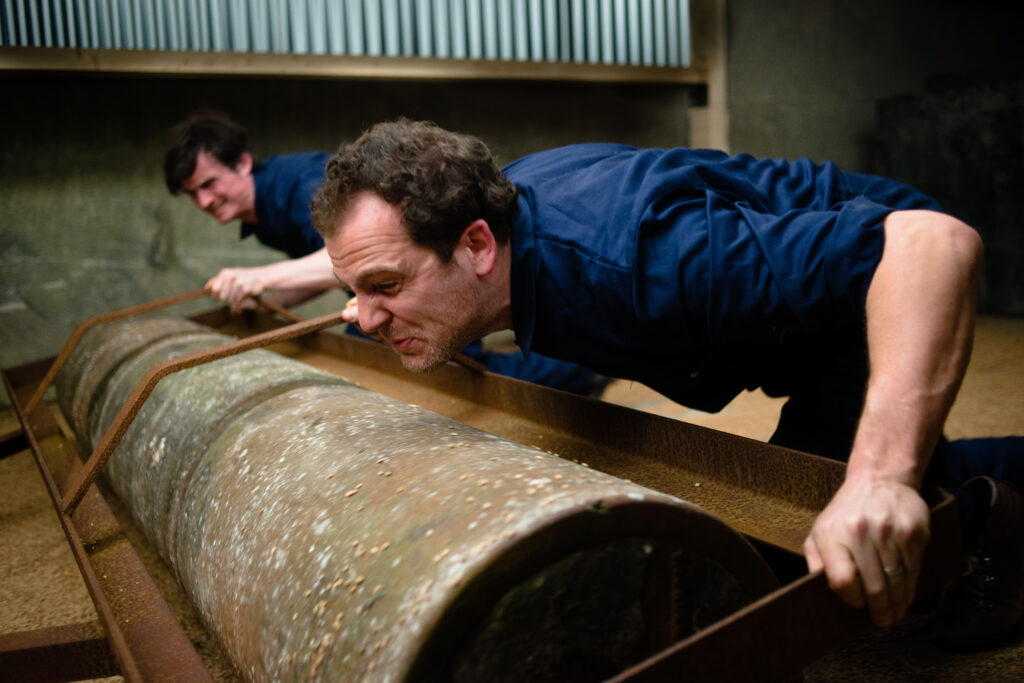
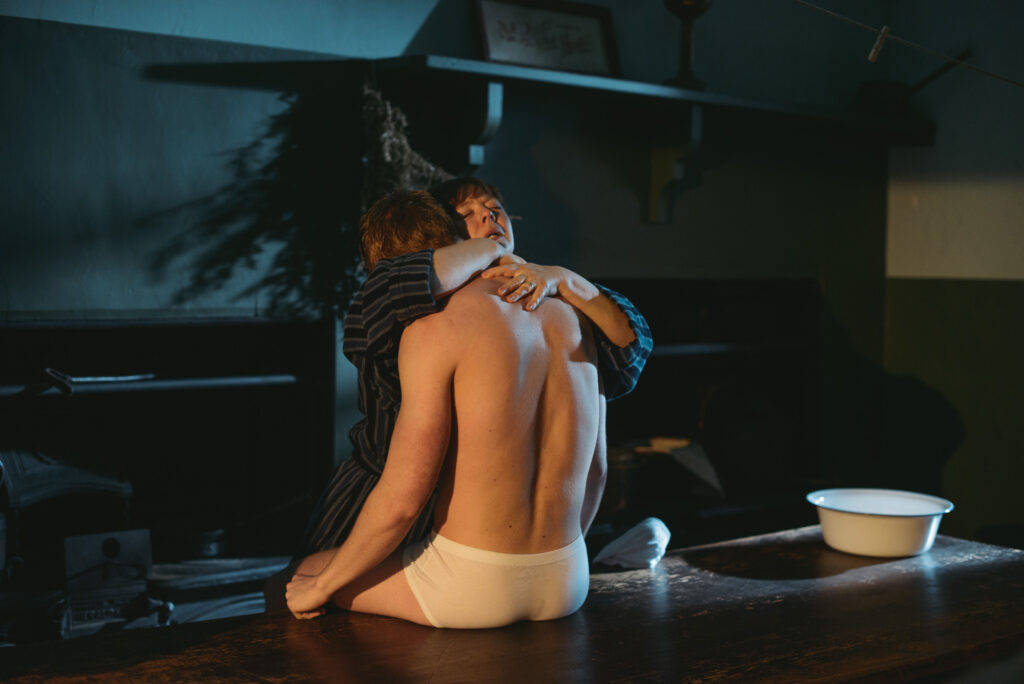
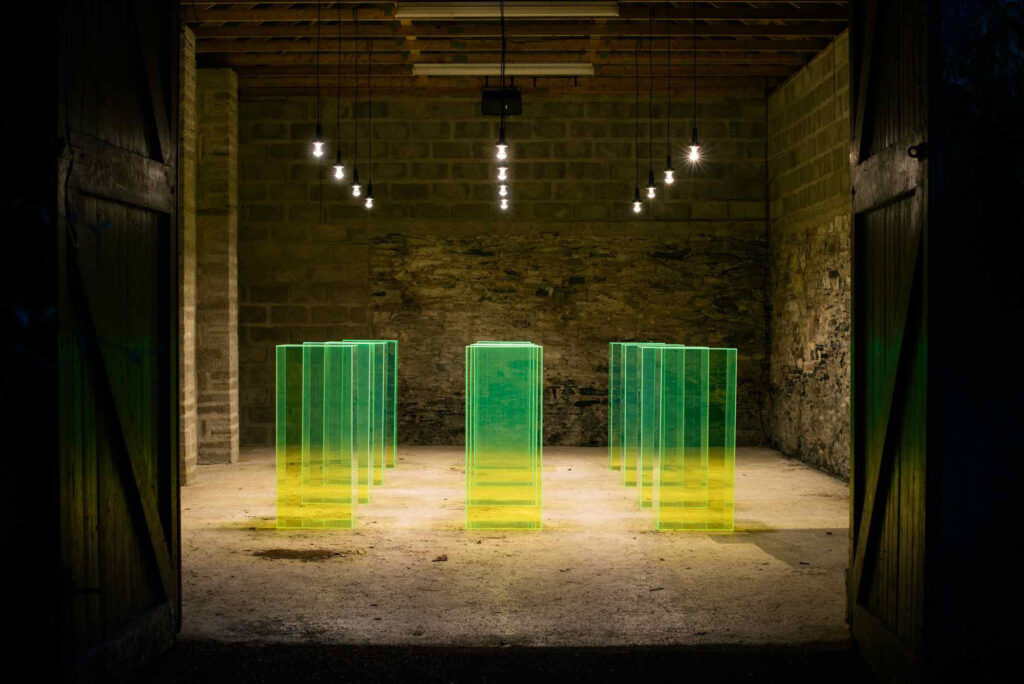
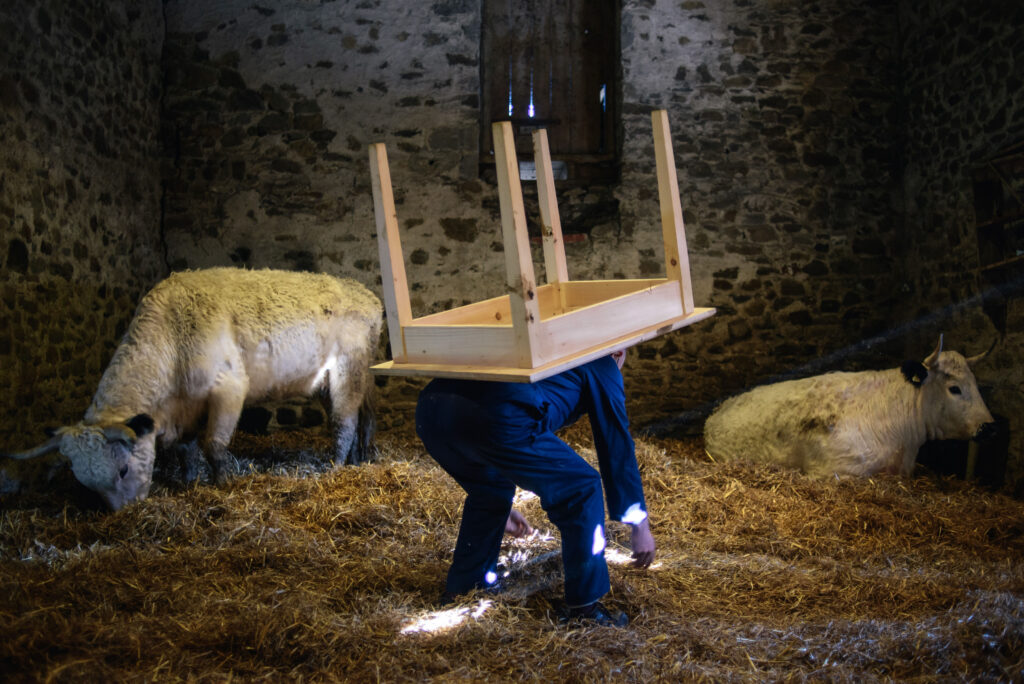
The fictional family was portrayed by a cast of well-known local actors, encountered by audiences through a series of intimate scenes staged throughout Carmarthenshire County Museum in Abergwili. The unfolding narrative was interwoven with installations and films by contemporary artists, created during a period of immersion in the county and responding to the elemental rhythms, realities and rituals of farming.
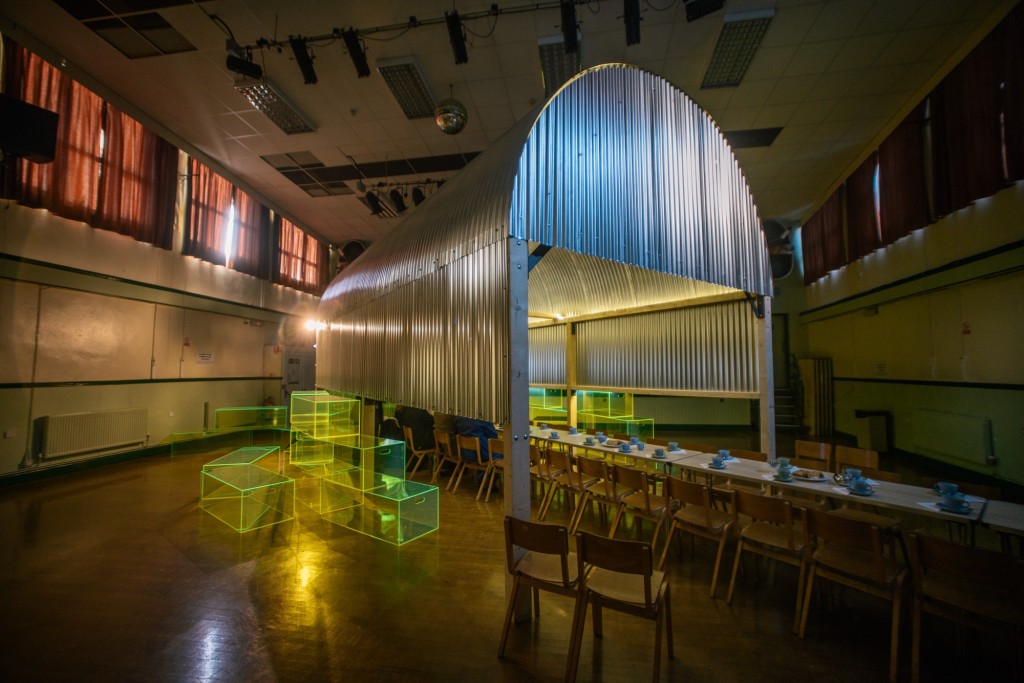
Produced by Theatr Genedlaethol Cymru in April 2013, Tir Sir Gâr offered an alternative, contemporary vision of rural life. The project occupied two sites in Carmarthen: the County Museum in Abergwili and St Peter’s Civic Hall in the town centre. At the latter, SEIAT presented a programme of free public talks and conversations, held inside a gleaming Dutch barn, which opened up the project’s central themes for wider discussion.
Tir Sir Gâr ultimately developed into a major transmedia project. It inspired the television drama Tir and the documentary Trysor Sir Gâr, presented by Marc Rees and produced by JOIO for S4C. Both formed part of the channel’s CYNEFIN (Habitat) season, which itself grew from the creative world and ideas first explored through Tir Sir Gâr.
Creative Producer : Siân Thomas
Intercut with video installations that offer sideways meditations on the rural way of life and traditions, this beautifully acted performance is a love letter to the land and those who farm it. There are choirs in the museum’s chapel, an exquisite laying-out scene in an old kitchen, and an abundance of poetry both visual and aural. Even if, like me, you don’t speak Welsh, it is perfectly understandable: love of land and family, plus blood, sweat and tears, are a universal language
Lyn Gardner, The Guardian
.